
Understanding Biceps Tenodesis
Comprehensive Guide to Biceps Tenodesis Procedure
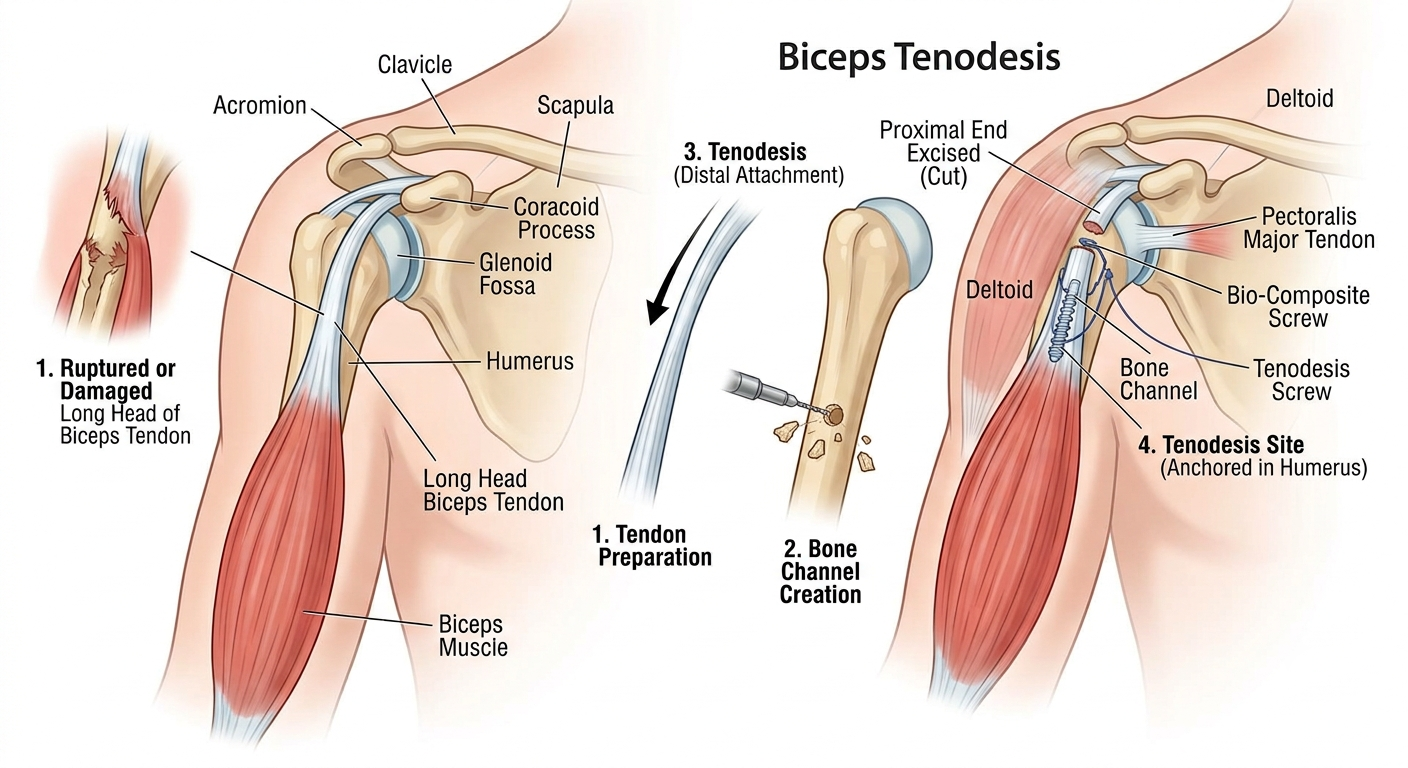
Explore the intricacies of biceps tenodesis, a surgical procedure designed to alleviate shoulder pain and restore function. This page will guide you through the process, expected outcomes, and potential risks associated with the surgery.
What is Biceps Tenodesis?
Biceps tenodesis is a surgical procedure aimed at relieving pain in the shoulder by reattaching the biceps tendon to the humerus bone. This procedure is typically recommended for patients experiencing pain due to Biceps Tendonitis or tears. During the surgery, the damaged section of the tendon is removed, and the remaining healthy tendon is anchored to the bone using surgical screws or sutures. This helps to stabilize the tendon and reduce pain, allowing for improved shoulder function.
The purpose of biceps tenodesis is to alleviate discomfort and restore mobility in patients suffering from biceps-related shoulder issues. The procedure is minimally invasive and can be performed arthroscopically (keyhole) but often requires a small cut to in the front of the arm where the biceps is attached
This approach minimizes recovery time and reduces the risk of complications. Biceps tenodesis is often considered when conservative treatments, such as physical therapy and medication, have not provided sufficient relief.
Expected Outcomes of Biceps Tenodesis
Recovery and Benefits Post-Surgery
Patients undergoing biceps tenodesis can expect a significant reduction in shoulder pain and an improvement in arm function. The recovery period typically spans several weeks, during which physical therapy plays a crucial role in regaining strength and flexibility. Most patients can return to their normal activities within three to six months, depending on the extent of the surgery and individual healing rates.
Successful biceps tenodesis can allow patients to resume sports and daily activities with increased comfort. While the procedure is generally safe, it’s important to be aware of potential risks such as infection, stiffness, incomplete pain relief and failure of the fixation . However, with proper post-operative care and adherence to rehabilitation protocols, the majority of patients achieve favorable outcomes.
Understanding the Risks
Potential Risks and Complications of Biceps Tenodesis
Common Questions About Biceps Tenodesis
Biceps tenodesis is a surgical procedure that involves reattaching the biceps tendon to the bone. It is often performed to relieve pain and restore function in the shoulder.
What is the recovery time after biceps tenodesis?
Are there any risks associated with biceps tenodesis?
As with any surgery, there are potential risks, including infection, nerve damage, stiffness and failure of the fixation. However, these are rare and can be managed effectively with proper care.
Will I need physical therapy after the procedure?
How long does the surgery take?
The procedure typically takes about 1 hour, depending on the complexity of the case. It also is often combined with other procedures when required
Can I drive after the surgery?
What should I expect during the recovery period?
Take the Next Step Towards Recovery
Discover how biceps tenodesis can enhance your quality of life. Contact Orthosports NZ to learn more about this procedure, its benefits, and potential risks. Our expert team is here to guide you through every step of your journey.